

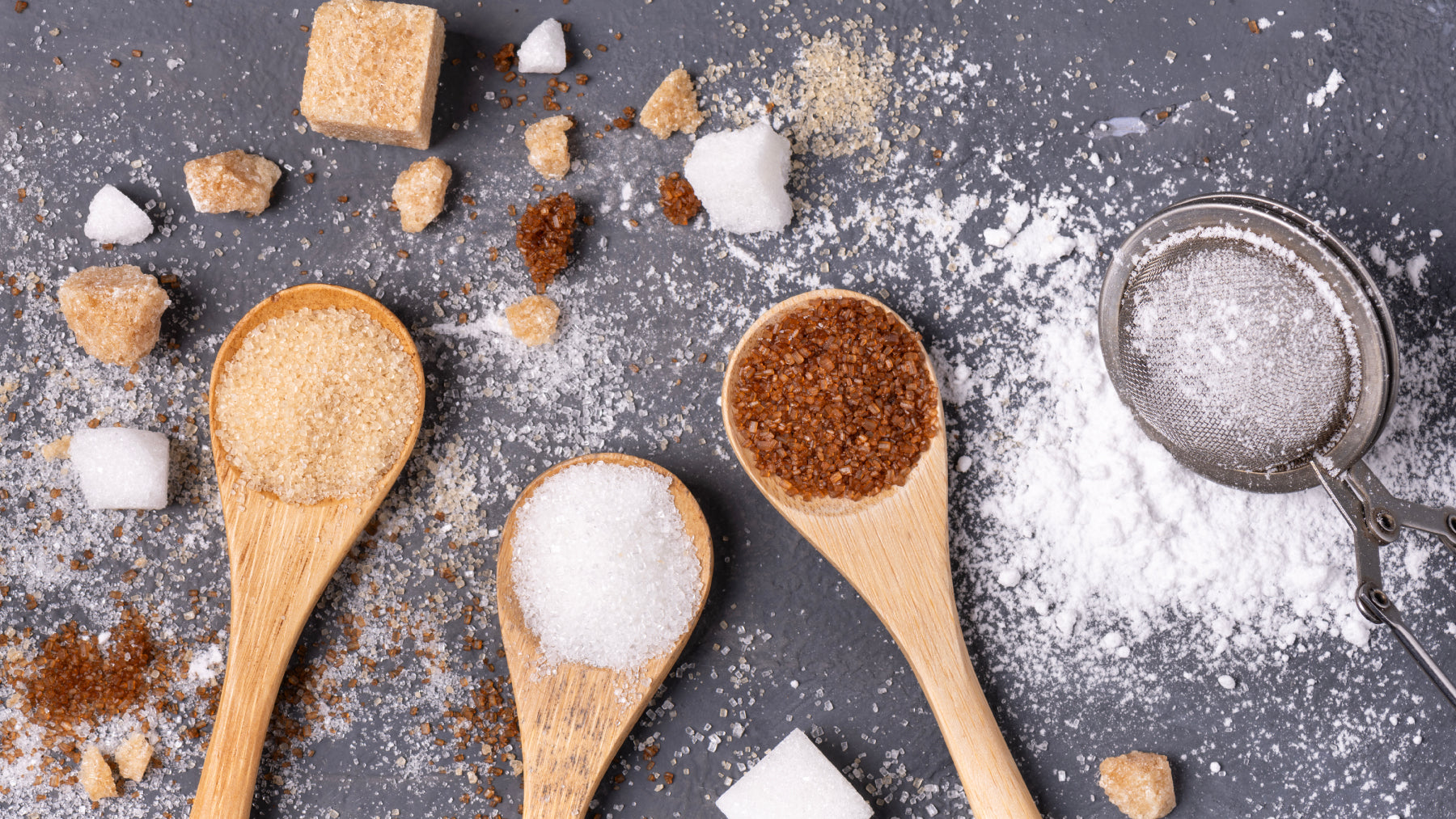
Sugars absorbed in the gut, and sugars that aren't? The reason monk fruit and oligosaccharides are considered "sugar-free."
Many of you may have the impression that "carbohydrates = weight gain" and "carbohydrates = blood sugar spike."
However, not all carbohydrates are absorbed by the gut in the same way.
This time, we will explain why monk fruit and oligosaccharides lead to "low-carb" by clarifying the difference between
✔ carbohydrates "absorbed" by the gut
✔ carbohydrates "hardly (or not) absorbed" by the gut.
■ What are carbohydrates absorbed by the gut?
Examples include:
Glucose, Fructose, Sugar (Sucrose), Maltose, etc.
These are broken down and absorbed in the small intestine, enter the bloodstream, and raise blood sugar levels.
When blood sugar rises, insulin is secreted, and excess is easily stored as fat.
In other words, common sugar is a carbohydrate that is almost 100% absorbed by the body.
■ What are carbohydrates that are not (or hardly) absorbed by the gut?
This is the key point.
Among carbohydrates, there are those that are:
・difficult to break down by digestive enzymes
・not absorbed due to their special molecular structure
・reach the large intestine as they are
These hardly raise blood sugar levels.
Typical examples are oligosaccharides, dietary fiber, and monk fruit-derived sweeteners.
■ Why does monk fruit lead to "low-carb"?
Monk fruit (rakanka) is a natural sweetener extracted from the "monk fruit," a fruit native to China.
Its main sweet component is called "mogroside."
This mogroside has the following characteristics:
✔ hardly absorbed in the small intestine
✔ hardly raises blood sugar levels
✔ almost zero calories
In other words, it's a sweetening component that provides sweetness but is "not taken into the body."
Therefore, by using monk fruit instead of sugar, you can suppress the actual amount of carbohydrate absorbed, which leads to a low-carb diet.
■ Why are oligosaccharides considered low-carb?
Oligosaccharides are also a type of "sugar," but they function differently from regular sugar.
Most oligosaccharides have the following characteristics:
✔ difficult to digest and absorb in the small intestine
✔ reach the large intestine
✔ serve as food for intestinal bacteria
Therefore, they offer benefits such as:
・blood sugar levels are less likely to spike
・less likely to be absorbed as energy
・support a healthy gut environment
In other words, some are carbohydrates that reach the intestines without becoming energy.
■ "Carbohydrates = bad" is not true
What's important here is that carbohydrates themselves are not bad.
The problem lies with carbohydrates that:
rapidly raise blood sugar levels, are easily absorbed, and tend to be overconsumed.
On the other hand, carbohydrates that are:
・difficult to absorb
・beneficial for the gut environment
・sweeteners that have little effect on blood sugar
can be allies for beauty and health if incorporated skillfully.
■ A new idea: "choosing" sweetness
Instead of just reducing sugar, it's about "choosing what type of carbohydrates to use."
Monk fruit and oligosaccharides are gentle options for:
those aiming for a low-carb diet
those concerned about blood sugar levels
those conscious of gut health
those who want to focus on beauty
We are moving from an era of abstaining from sweets to an era of choosing sweetness based on "how it's absorbed."
By understanding the true nature of carbohydrates, you can enjoy sweets more freely and healthily.
・Click here for a list of low-carb (approx. 10g carbs) sweets and cakes>>
・Click here for a list of sugar-free (under 5g carbs, low-GI) sweets and cakes>>
Sweets Specialty Store Gentle on the Body BEYOND SWEETS
【BEYOND SWEETS' 3 Categories】
■BEYOND1 Beauty & Diet>>
■BEYOND2 Medical & Sports>>
■BEYOND3 Allergy-Friendly>>
PICK UP

![[Room Temperature Delivery] Plant-Based Jelly|YUMMY+ 3-Pack](http://www.beyondsweets.com/cdn/shop/files/26-04-28_DSC7979.jpg?v=1777432489&width=1024)
![[Room Temperature Delivery] Plant-Based Jelly | YUMMY+ Set of 6](http://www.beyondsweets.com/cdn/shop/files/26-04-28_DSC7981.jpg?v=1777432489&width=1024)

![[Free shipping, room temperature delivery] Plant-based | Baked Goods Gift HISUI, 1-tier [11 pieces]](http://www.beyondsweets.com/cdn/shop/files/26-04-28_DSC7950.jpg?v=1777432489&width=1024)
![[Free shipping, room temperature delivery] Low-carb | Baked Goods Gift HISUI 1-Tier [10 pieces]](http://www.beyondsweets.com/cdn/shop/files/26-04-28_DSC7955.jpg?v=1777432489&width=1024)

